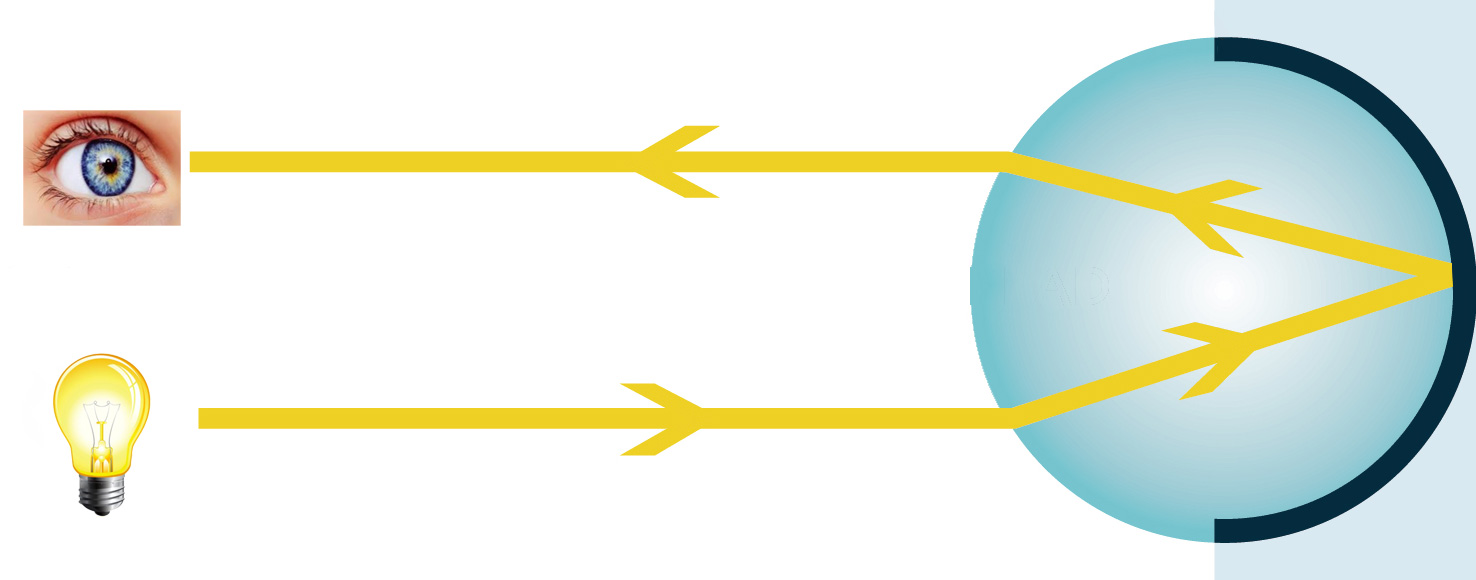
Glass bead and prismatic reflective tapes work in different ways to reflect light.
Glass bead reflective tape uses small glass spheres to bend and reflect light back to the light source. They act as a type of parabolic mirror that take in light, bend it, and then bounce it back. These tapes are bright, but imperfections and curved surfaces in the glass beads result in less efficient reflection of light compared to prismatic tapes. Glass bead tapes are approximately 30% efficient in reflecting light.
On the other hand, prismatic reflective tape utilizes man-made prisms to reflect light. These prisms have a tighter and more efficient return of light, resulting in a brighter and tighter beam. Prismatic tapes have a longer operating range, extending beyond the thousand-foot mark. They are particularly suitable for applications where long-distance conspicuity is important, such as marine, highway, or traffic applications. Prismatic reflective tapes are about 80% efficient.
It is worth noting that prismatic tapes were invented by Reflexite Americas in the 1960s, while glass bead tapes have been in use since the 1930s. Despite the advancements in prismatic technology, glass bead tapes have not been entirely replaced because they still have certain characteristics that make them desirable in certain circumstances. Glass bead tapes are less expensive and can be suitable for applications within a 300-foot range.
When to Choose Glass Bead vs. Prismatic
Selecting between glass bead and prismatic reflective tape depends largely on your intended application and the visibility distance you require. For general-purpose marking where objects need to be seen from relatively short distances, glass bead tapes are a practical and economical choice. Applications such as marking mailboxes, driveway posts, warehouse columns, and equipment in controlled environments are well served by glass bead tapes like flexible engineer grade or super engineer grade.
Prismatic tapes are the better option when long-range visibility is essential. Highway signs, DOT conspicuity markings on tractor trailers, emergency vehicle chevrons, and marine applications all benefit from the superior brightness and range of prismatic technology. In these scenarios, the additional cost of prismatic tape is justified by the significantly improved safety performance.
Frequently Asked Questions
Can you mix glass bead and prismatic tapes on the same vehicle or object? Yes, it is possible to use both types on the same application. Some fleet operators use prismatic tape in the most critical visibility areas, such as the rear of a trailer, while using glass bead tape in less critical locations to reduce costs. However, keep in mind that the visual difference in brightness between the two types may be noticeable at night.
Does prismatic tape work better in rain? Prismatic tapes generally outperform glass bead tapes in wet conditions. Water on the surface of glass bead tape can interfere with the way light enters and exits the glass spheres, reducing reflectivity. Prismatic tapes, because their prisms are sealed beneath a smooth top layer, are less affected by surface moisture. This makes prismatic tape a preferred choice for applications where the tape will frequently be exposed to rain or road spray.
How can I tell which type of tape I have? One simple way to tell the difference is to look at the tape closely under good lighting. Glass bead tapes have a slightly textured, granular appearance due to the embedded glass spheres. Prismatic tapes have a smoother surface and often display a subtle geometric pattern created by the underlying prism array. For more details on how different tapes compare in terms of measured brightness, see our reflective tape brightness study.
For more information on the difference between glass bead and prismatic reflective tape, you can visit this article: [https://reflectivetape.info/what-is-the-difference-between-glass-bead-and-prismatic-reflective-tape/]
For more information, go to www.tapefinder.com and click on the contact link at the top of the page.