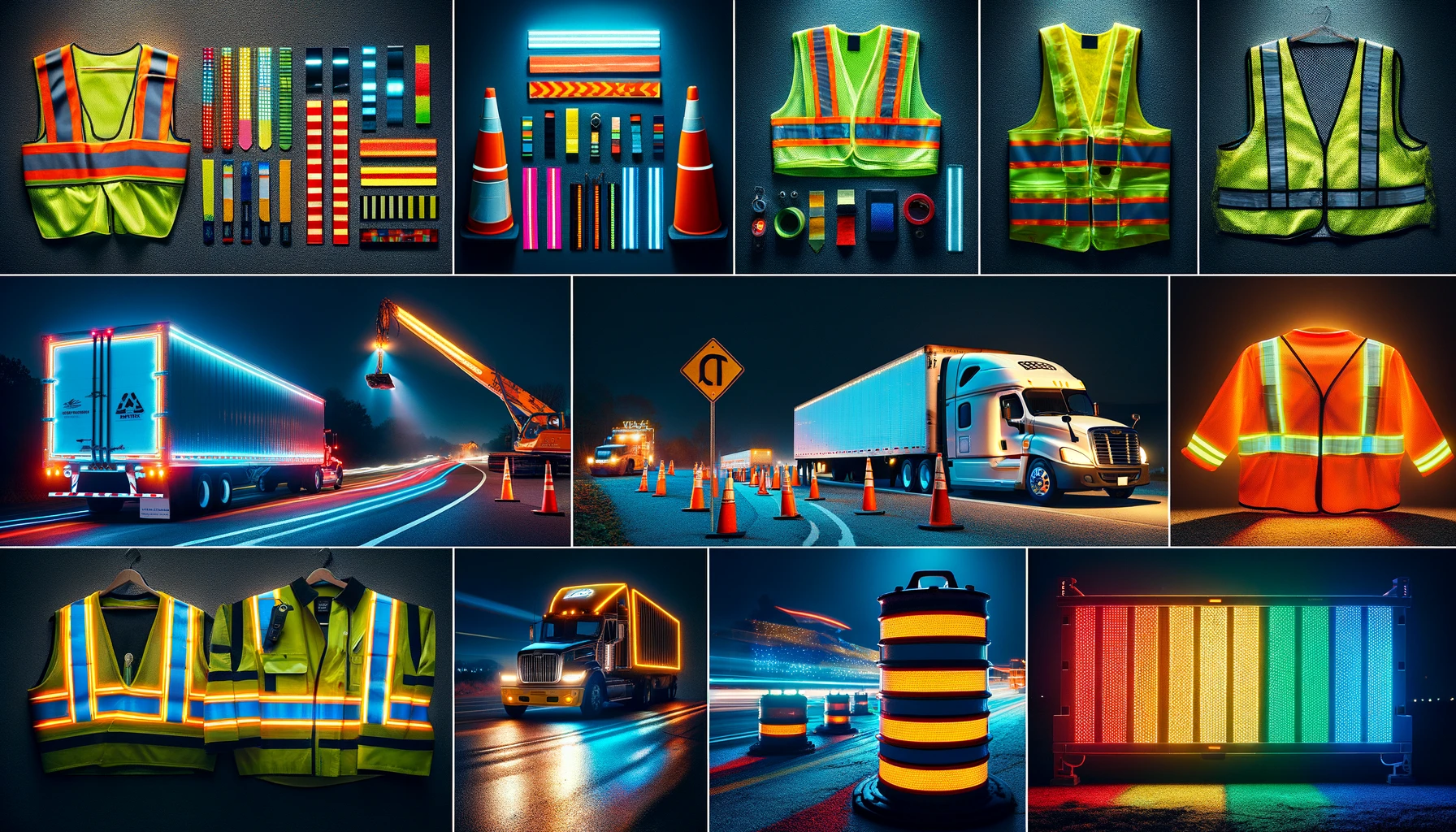
Here are 30 different applications for reflective tape:
- Road construction signs and markers
- Traffic cones and barricades
- Emergency vehicles (police cars, fire trucks, ambulances)
- School buses and transportation vehicles
- Bicycle frames and helmets
- Safety vests and clothing for construction workers
- Mining equipment and helmets
- Marine buoys and life jackets
- Sports equipment (hockey sticks, football helmets)
- Pet collars and leashes for nighttime walks
- Wheelchairs and mobility aids
- Backpacks and bags for increased visibility
- Horse bridles and leg wraps for equestrian safety
- Industrial machinery and equipment
- Recreational vehicles (RVs, boats, trailers)
- Mailboxes for improved visibility
- Railings and staircases in buildings
- Hunting gear and accessories
- Camping equipment (tents, backpacks)
- Construction site barriers and fencing
- Roadside reflectors and delineators
- Parking lot markings and signs
- Safety helmets for workers in low-light conditions
- Outdoor signage and billboards
- Emergency exits and escape routes in buildings
- Traffic signs and signals
- Agricultural machinery and vehicles
- Airport runways and taxiways
- Outdoor event signage and crowd control barriers
- Highway guardrails and median barriers
These are just a few examples of the many applications for reflective tape. If you have any more questions or need further information, please feel free to ask. For more information, go to www.tapefinder.com and click on the contact link at the top of the page.
Choosing the Right Tape for Your Application
Not every application on this list requires the same type of reflective tape. The key factors to consider when selecting a tape are the required visibility distance, the surface you are applying it to, and the environmental conditions it will face. For applications where long-distance visibility is critical, such as highway signs, emergency vehicles, or marine buoys, a higher-grade prismatic tape will provide the best performance. For shorter-range applications like mailboxes, pet collars, or indoor stairway markings, an engineer grade tape is typically sufficient and more cost-effective.
Surface compatibility is another important consideration. Flat, smooth surfaces work well with nearly any type of reflective tape. However, if you need to apply tape to a curved surface such as a bicycle helmet, traffic cone, or bollard, you should select a flexible or conformable tape that can wrap around curves without lifting or peeling. For an in-depth look at the different grades and types available, our guide on the 11 different types of reflective tape is a helpful resource.
Common Mistakes to Avoid
One of the most common mistakes people make when using reflective tape is applying it to a dirty or oily surface. The adhesive needs a clean substrate to bond properly, so always wipe the surface with isopropyl alcohol or a degreaser before installation. Another frequent error is using tape that is not rated for outdoor use in an exterior application. Indoor-rated tapes will degrade quickly when exposed to UV light and moisture, losing both their adhesive strength and their reflectivity. Finally, avoid cutting reflective tape with dull scissors or blades, as ragged edges can allow moisture to get underneath and cause premature failure. For more application categories and guidance, see our article on the different categories for reflective tape applications.